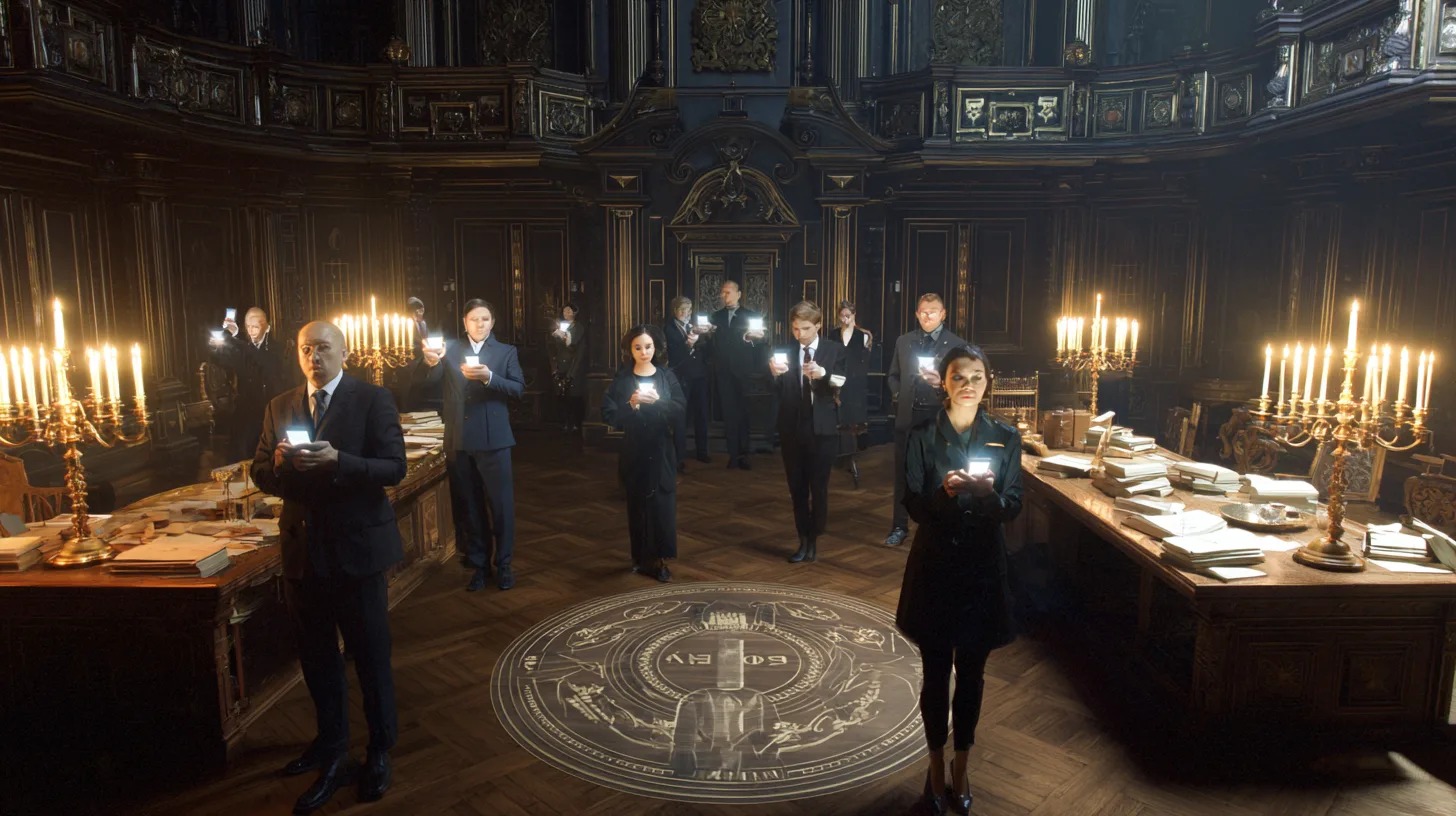
ALICE.report

How a neuro-quest session runs

The Clock tells the truth

Five minutes per mission. Sixty seconds at the peaks. Somewhere around minute 47 the plan breaks and someone takes the room. Alice records who, and hands you the report 15 minutes after the last decision.

Sample session · Timefold · Alexandria 48 BC · the Room, annotated

5 minutes per mission · 60 seconds at the peaks · 3-5-10 minutes windows

sampleThe Room · Timefold · 8 participants
Session 00:21:36Autonomy
Captain · P5 · 1st time04:12the Clock
Alexandria 48 BC · The Burning LibraryScenario screen · the film the team is inside
P1
P2
P3
P4
P5 · CaptainCommit
P6
P7
P8
Card Tray · 7 of 8 remainingAsk a Local used by P6 at 00:19:48
Cancel the OrderUse card
ReplayUse card
Five More MinutesUse card
Quiet CounselUse card
Hand OverUse card
Ask a LocalUsed · P6
Personal MissionUse card
Silent MinuteUse card
Era 1 of 4 · Alexandria 48 BCChrome · Edge · Safari · no installs
  1. 01 Scenario screen Center. The Burning Library still: the east wing, smoke in the lamplight.
  2. 02 Participant tiles Below the screen. Eight tiles; one wears the Captain badge; the Commit button is lit on that tile only.
  3. 03 The Clock Top center, reading 04:12 in the section color. Five minutes per mission; sixty seconds at the peaks.
  4. 04 Card Tray Bottom. Whatever the team has not used yet; one card already used this era.
  5. 05 Autonomy counter Top right. The resource spent on Ask a Local.
  6. 06 Alice's voice ribbon Bottom left. Waveform and live caption: “The Librarian will read the Index once. Take what you can.”

No installs. Chrome, Edge, Safari.

Before

Before the Room opens

A session starts before anyone hears Alice.

You book a date and a time. Slots run across US, UK, EU and GCC hours, and a manager replies within one business day to confirm the slot. Your workspace then asks seven questions in order: your role, your goal for the session, the size of the team, who to invite, which world, which slot, and a Room Check of your own. The last screen says Session scheduled.

Two settings on that path matter later. The access policy decides who sees what after the session: every participant always receives their own Gap Card, and you decide whether the sponsor sees individual cards or only the team aggregates. The salary bands are optional. Enter them and the People-Risk Map in the Executive Dash prices each risk in your numbers; skip them and it uses an industry default, labeled as an estimate.

Participants prepare nothing. There is no pre-read, no questionnaire, no survey. Each one receives an invitation with the date, the start time in their own time zone and a link. What they learn about the plot, they learn from Alice at 00:00.

Room Check takes two minutes and runs on the participant’s own laptop: camera, microphone, headphones, bandwidth. Headphones are recommended, because Alice speaks and echo confuses the Assessor. The check ends on the consent line, and nobody enters the Room without accepting it. The states are Checking, Ready and Fix needed, and Fix needed names the fix.

The Room opens ten minutes before the start. Tiles fill the Lobby as people arrive, and the count sits under the Clock: 7 of 9 here.
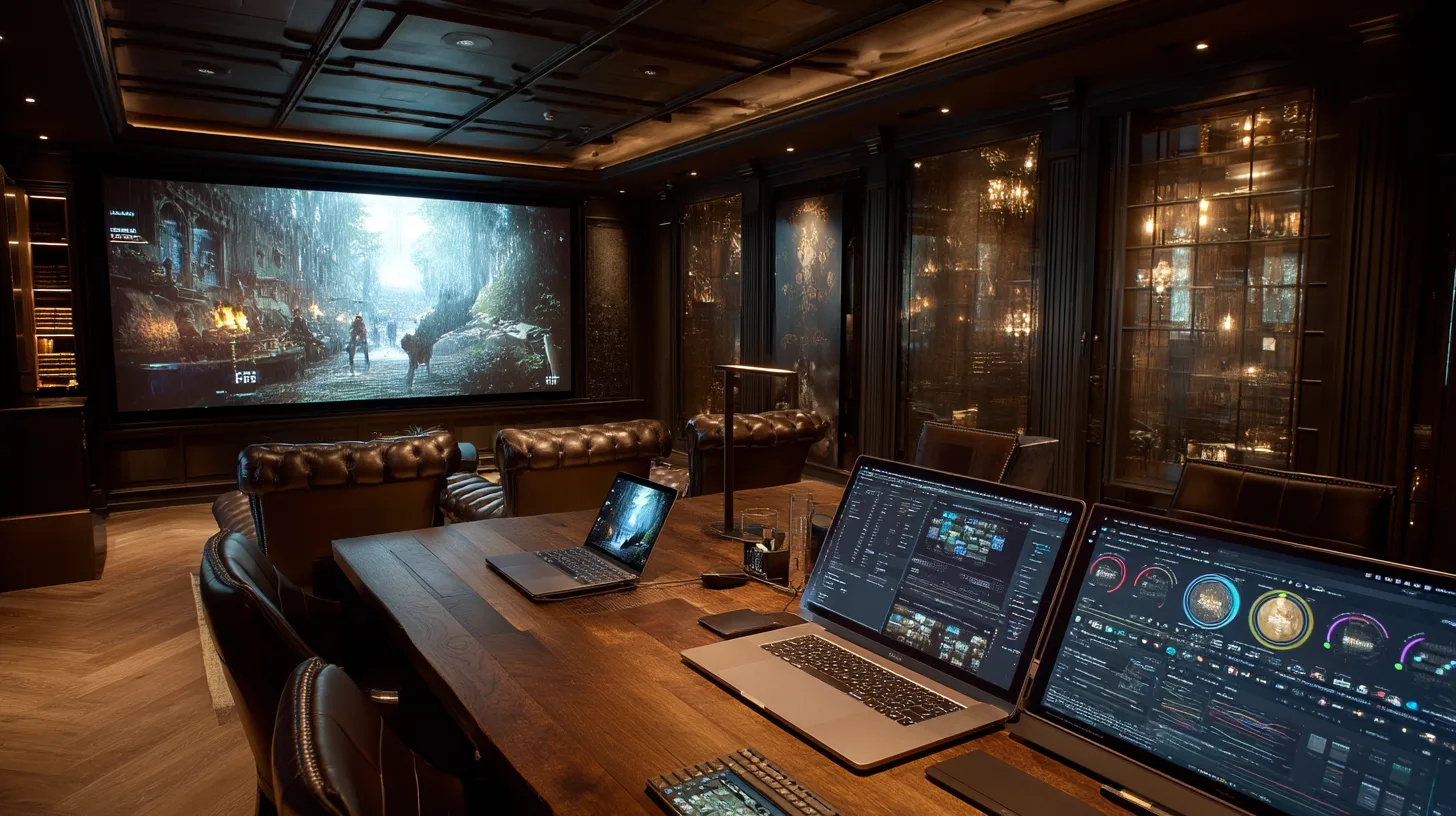

Room Check Two minutes · the participant's own laptop sample
Camera
Ready
Mic
Ready
Headphones
Headphones recommended. Alice speaks; echo confuses the Assessor.
Connection
Checking…
I understand and agree Checking → Ready → Fix needed

The pre-session path · what you see at each step

  1. Booking

    Date and time picked; details sent. They reach our team at report@alice.report.

    A manager replies within one business day.

  2. Onboarding

    Your role → Your goal → Team size → Invite teammates → Choose a world → Pick a slot → Room Check.

    Session scheduled

  3. Invitations

    5-12 participants, each with the start time in their own time zone and a link. No account needed to join. “Your session with Alice: Timefold, Thu, 10:00 your time.”

    Invitation line · sample

  4. Room Check

    Two minutes per participant. Camera · Mic · Connection. The consent line.

    Checking → Ready → Fix needed

  5. 10 minutes before

    The Room opens. The Lobby fills: “7 of 9 here. Alice starts at 10:00.”

    Lobby line · sample

During

Four eras under one Clock

The Room is one screen, and nothing else needs to be open.

The scenario screen sits in the center. It is the film, and it reacts. Participant tiles run below it, one of them wearing the Captain badge. The Clock sits top center. The Card Tray runs along the bottom and holds whatever the team has not used yet. The Autonomy counter sits top right. Bottom left is Alice’s voice ribbon, a waveform and a live caption of everything she says, so no line is lost to a bad connection. The Commit button is lit on the captain’s tile and on no other.

The briefing comes first. Alice sets the scene: the Museum of Time, the Stabilizer that has failed, four lost artifacts across four eras, and the team as the Keepers who have to bring them back. The eight Opportunity Cards appear in the tray one at a time, each with a one-line meaning. Then the first rule, as a line: “Pick a captain. Sixty seconds. Nobody keeps the seat twice in a row.”

From there, the session is missions on the Clock. Five minutes per mission. Sixty seconds at the peaks. Between three and ten minutes when Alice widens or narrows the window for the plot. At a peak the Clock turns the section color, every tile border pulses once and Alice’s voice drops register.

The captaincy rotates. The first captain is the team’s choice; after that the captaincy moves at the mission boundary by rotation, or in the middle of one by card. Nobody may be captain more than twice, and never twice in a row. The handover is announced, not negotiated: “Captaincy moves to [name]. Reason: rotation.” When a card causes it, the reason reads “card”. By the fourth era the rule has put people in the seat who would never have asked for it, and taken it from people who would never have given it up.

The cards are used in the open. A participant taps a card in the tray and sees Use card. Cancel the Order asks once more, in one line: “Cancel the Order is one-time. Use it now?” The effect is immediate and public, and a ledger line appears for everyone: Five More Minutes — used by P4 at 00:47:12. Clock +5:00. When Silent Minute is used, the muted tile shows a small white mask and the others see “P2 is silent for 0:47”. Nothing is hidden from participants except the plot.

Two things happen without anyone asking. When a participant drops, Alice pauses the Clock for that mission: “We lost [name]. Clock paused. Sixty seconds to reconnect.” And the session owner, if they are not in the Room, sees a read-only slice of the Director Console: progress across the four eras, who is connected, connection health. Never the transcript, and never a score. The scores arrive with the report, for everyone at once, 15 minutes after the last decision.

Sample session · 8 participants · Timefold
  1. 00:00 Briefing. The Museum, the Stabilizer, four artifacts. The eight cards appear in the tray one at a time. Voice calibration. No indicators yet.
  2. 00:15 The Stabilizer fails. Alexandria 48 BC. The scenario screen cuts to the library; the Clock starts its first five minutes. The Indicator Stream opens.
  3. 00:18 First captain chosen by the team. “Pick a captain. Sixty seconds. Nobody keeps the seat twice in a row.” Who proposed, who agreed, who said nothing: the first three entries.
  4. 00:40 Venice 1498. Captaincy moves by rotation. The mint closes at the bell. Second captain of the session, by rotation.
  5. 00:47minute 47 The plan breaks. Five More Minutes used, decision latency 212 s. Minute 47: two plans, four voices, one card. Dimension 4, Velocity, gets its first strong reading.
  6. 00:58 Hand Over. A participant passes the captaincy without being asked. Hand Over the Captaincy: used, by whom, what followed.
  7. 01:05 Amsterdam 1702. Half the crew, rising water, the tide as the deadline. Dimension 5, Roles: the delegation window opens.
  8. 01:30 Orbit 2100. A mechanism nobody alive has operated. Windows widen to ten minutes, then drop to sixty seconds without warning. Dimension 6, Pressure: the delta between the two windows.
  9. 01:32 Personal Mission activated. One participant now holds a private objective slightly at odds with the team’s. Nobody else knows what it is. Priorities and ethics, scored from here to the last decision.
  10. 01:51 Silent Minute. One tile shows a small white mask; the team routes around the silence through chat. Dimension 3, Voice: who notices, and how fast.
  11. 01:55 Last decision. The Stabilizer holds, or it does not. The Indicator Stream closes. State: Compiling.
  12. 02:09:32the Alice Report Report ready. Generated 14 min 32 s after the last decision. State: Report ready.
  13. 02:10 Debrief with the report on screen. “Why did you decide that in the Mint? What else could you have done?” State: Debrief.
  14. 03:00 End. State: Pulse due (Growth and above).

Times are from one sample session. Your session will not look like this one; it will look like your team.

The card interaction · three states

01 · In the tray

Five More Minutes Extends the mission Clock. Use card

A participant taps a card and sees Use card. Never the other verb.

02 · One-time confirmation

Cancel the Order is one-time. Use it now?

Cancel the Order asks once more, in one line. The effect is immediate and public.

03 · The ledger line, for everyone

  1. LedgerFive More Minutes — used by P4 at 00:47:12. Clock +5:00
  2. LedgerSilent Minute — used by P5 at 01:51:05 on P2

Nothing is hidden from participants except the plot. Sample session.

Alice, the AI Director

She runs the Room

Alice narrates. She voices every character the team meets, each with a voice and a wish of its own: the Librarian who wants everything saved, the Clerk who wants a name, the Shipwright who wants his crew back, the Last Engineer who remembers the sequence wrong. She adapts the plot and the difficulty while the session runs, and she keeps the pace, so there is no facilitator in the Room and no need for one.

Her interventions are of two kinds. A twist is a plot move: smoke in the east wing, a bell moved earlier, a character who turns to the participant who has not spoken and asks them by name. A cut is a pressure move: the Clock reset to sixty seconds, a window narrowed, a difficulty step up. Neither runs on a schedule. Both run on what is happening in the Room: a decision that has not come, two voices that have not been heard, a consensus that arrived too fast to be real. Every twist and every cut is logged with its trigger, and the Director’s Log goes into your report.

Three things she does not do. She does not judge. She does not score; scoring belongs to the Assessor. And she does not decide anything about anyone. The Log says what Alice did and why. The report says what the team did.

Alice’s lines · dialogue from the session

Briefing
“Pick a captain. Sixty seconds. Nobody keeps the seat twice in a row.”
Alexandria
“I'm closing the east door in sixty seconds. Decide.”
Venice
“The mint closes at the bell. Your captain has not spoken in two minutes. Decide.”
Handover
“Captaincy moves to [name]. Reason: rotation.”
Connection drop
“We lost [name]. Clock paused. Sixty seconds to reconnect.”
Debrief
“Why did you decide that in the Mint? What else could you have done?”
Alice, the AI Director Alice · Venice 1498 · 0:20 · sample

“The mint closes at the bell. Your captain has not spoken in two minutes. Decide.”

Captions always onSound off · voice joins in the Room

Two logs, the same 40 seconds · one sample session, nine participants

Director's Log sample
  1. 00:41:12 No decision for 3m 08s. Four voices, two silent. Trigger: smoke enters the east wing. Clock reset to 60s.
  2. 01:09:20 Consensus in 38 s, no dissent voiced. Difficulty step +1: the Foreman withdraws four men.
  3. 01:32:50 Personal Mission activated by P6. Objective withheld from the Log until the debrief.

What Alice did and why. In your report after the session.

Indicator Stream sample
  1. 00:41:40 Interruption: P3 over P7 (3rd this era)
  2. 00:42:02 Decision committed by captain after 212 s
  3. 00:42:05 Voices heard before commit: 4 of 9

What the Assessor heard, as it heard it. Becomes the Reel in the report.

The Alice Assessor

Audio in. Indicators out.

While Alice runs the Room, the Assessor listens.

Speech becomes a transcript with a speaker and a timestamp on every turn. From the transcript and from the Room’s own events she takes the Signals: who spoke, when and for how long; turn-taking; interruptions; decision latency; card usage; captain handovers; mission outcomes. That is the whole input. There is no camera in the pipeline. She does not read faces and she does not infer emotions, by design.

Signals become indicators. An indicator is a countable behavior with a number and a name: Indicator 41, yields the lead when asked. Indicator 17, influence without authority. There are 92 of them, written and scored by human assessors in the 2024-2025 sessions before Alice took the seat. Indicators roll up into 25 competencies in five families, Communication, Collaboration, Leadership, Execution and Adaptability, scored for each participant on five levels from Absent to Signature. Competencies and the Room’s team-level signals become the 7 team-dynamics dimensions. Every one of them is scored against the Cohort, the anonymized set of every team that has run a session, as a percentile.

Every score keeps its minute. In the report, a competency at the Strong level links to the Moments that earned it: the transcript lines, with timestamps, text only. What the Assessor could not hear is listed too: a muted mic, a dropped connection, a participant who sat out a mission. That page is called Method and Confidence, and it is the last page of every report.

Alice Assessor · livesample · Venice 1498 · 8 participants
419 indicators captured this session
  1. 00:47:12P4Indicator 62, uses Five More Minutes on the mission that needs it most+1Five More Minutes used. Clock +5:00. "Buy time, not a guess."cardResource management
  2. 00:47:05P6Indicator 26, uses Quiet Counsel to include, not to conspire+1Quiet Counsel used on P7. 30 s.cardTrust and psychological safety
  3. 00:46:20P2Indicator 91, no blame statement within 30 seconds of failure−1"That was P4's shelf." 6 s after the setback.speechEmotional self-regulation
  4. 00:42:02P3Indicator 47, decision latency under the Clock−1Decision committed by captain after 212 stimingDecision-making and execution
  5. 00:41:55P3Indicator 48, states the reason before the choice+1"Because the Clerk wants a name, we give him the wrong one."speechDecision-making and execution
  6. 00:41:48P1Indicator 25, invites a quiet teammate into the decision+1"P7, you have not said what you would do."speechTrust and psychological safety
  7. 00:41:40P3Indicator 30, interruptions during a dispute−1Interruption: P3 over P7 (3rd this era)speechConflict resolution

The pipeline

  1. Signals
  2. 92 indicators
  3. 25 competencies
  4. 7 dimensions
  5. the Cohort
  6. the Alice Report

The seven team-dynamics dimensions · the signal each one is built from

  1. 1 Trust Openness of information, defensive language, admissions of error.
  2. 2 Conflict Disagreements raised, resolved or suppressed; tone under disagreement; Cancel the Order usage.
  3. 3 Voice Airtime distribution, interruptions, who is asked and who is not; response to Silent Minute.
  4. 4 Velocity Decision latency under the Clock; commits per mission; Five More Minutes usage.
  5. 5 Roles Handover behavior, delegation, role drift across eras; the captaincy pattern.
  6. 6 Pressure Performance delta between normal windows and 60-second peaks.
  7. 7 Learning Adaptation after a failed mission; Replay behavior; reuse of what worked.

No facial recognition. No emotion recognition. Audio is processed during the session; raw recordings are deleted within 24 hours unless you opt in.

After

After the last decision

The fourth era ends on a decision. The session state changes to Compiling, and the Room shows one line: “Alice is compiling your report.” Compiling is the honest name for the 15 minutes. The Assessor is scoring 92 indicators against the Cohort and writing the Moments that evidence each score. The team takes a break. The Clock, for once, is not shown.

Then: “Your Alice Report is ready. Generated 14 min 32 s after the last decision. Open · Send to the owner.”

The debrief opens with the report on screen. Alice leads it. She asks, the team answers, and the scenario screen shows the team’s own timeline, so every answer can be checked against the minute: “Why did you decide that in the Mint? What else could you have done?” The team hears the team’s results together first: the seven dimensions against the Cohort, then the Executive Dash. Each participant then opens their own Gap Card, on their own screen. On Growth and Enterprise your success manager can lead the debrief in Alice’s place, with the Director’s Log in hand.

The session ends with the debrief, 120-180 minutes after the briefing began. Within 24 hours the raw audio is gone, unless you opted in to keep it; the transcript excerpts in the Moments remain, because they are the evidence. On Growth and above, a Pulse-Test follows at day 30 and day 90: ten minutes, anonymous, plotted against the session baseline, so you know whether what the team agreed on in the debrief held.

Session states · the workspace progress line

  1. Scheduled
  2. Briefing
  3. In session
  4. Compiling
  5. Report ready
  6. Debrief
  7. Pulse due

“Alice is compiling your report.”

In the Room · 02:09:32sample

Your Alice Reportis ready

Generated 14 min 32 s after the last decision.

Open Send to the owner

What you receive

What lands in your workspace

The Alice Report is one document with a page for every reader. The sponsor reads the first page. The team lead reads the Heat Map and the Playbook. Each participant reads one card. Your DPO reads the last page. Your HRIS reads the export.

PartWhat it isWho opens it first
Executive Dash One page: three conclusions in plain sentences, Team Potential as a cohort percentile band, the People-Risk Map with a money line on each of three risks. The sponsor, the CEO, the investment committee
Heat Map 25x5 25 competencies by five levels: Absent, Emerging, Working, Strong, Signature. HR, L&D, the team lead
Gap Cards One per participant: 3 strengths, 2 gaps, team-role tendency, 3 Moments as evidence, one recommended pairing. Each participant, on their own screen
Moments Timestamped transcript excerpts behind every score. Text only. The Reel is the timeline view of the same data. Anyone who wants to argue with a score
90-Day Playbook 12 steps in 3 sprints (days 1-30, 31-60, 61-90), checkpoints at 30/60/90, an owner per step. The team lead, on Monday
Talent Matrix The assessment matrix as an export, Excel and HRIS-ready formats. Growth and above. Your HRIS
Method and Confidence What was measured, confidence per dimension, what Alice could not observe. Your methodologist, your DPO, your skeptic
The Director's Log Every twist and cut, with its trigger and its minute. Whoever leads the debrief
Pulse-Test A 10-minute anonymous check at day 30 and day 90, against the session baseline. Growth and above. The sponsor, twice

Who sees what is set by the access policy you chose at onboarding. Every participant gets their own Gap Card. The sponsor gets the team report and, by your policy, the individual cards or only the aggregates. Raw audio is gone within 24 hours.

The sample report · open, ungated

Eight participants, a logistics leadership team, synthetic names, every score with its minute.

Sample Alice Report · synthetic team · sample names

Northwind Logistics leadership team · Timefold · 8 participants · 171 minutes · 4 of 4 eras

Team Potential
52nd-66thcohort percentile band · confidence high
Top strength
PressureDimension 6 · 71st percentile · 3.8 of 5
Top risk
Warning$102,000Decision bottleneck at the COO · per year · estimate
90-Day Playbook
12 steps3 sprints · checkpoints at days 30, 60 and 90 · an owner on every step

Report generated 14 min 32 s after the last decision

Open the sample report

Objections, answered where they occur

What people ask before they book

“We are remote across four time zones, and IT locks down our laptops.”

Browser only, no installs: Chrome, Edge, Safari. Room Check takes two minutes and needs nothing from IT. Alice pauses the Clock when someone drops. The method ran online for distributed teams before it ran in Alice. Slots run across US, UK, EU and GCC hours, and every invitation shows the start time in the participant’s own time zone.

“My executives will not sit through a story.”

120-180 minutes, and they are the story. By minute twenty the library is on fire and the Clock reads 4:59. Nobody argues with a clock.

“People will perform for the camera.”

For about fifteen minutes. Then the Clock drops to sixty seconds, the plan breaks and the captaincy changes hands. Performance does not survive minute 47. The Pressure dimension measures exactly that delta, and there is no camera in the pipeline to perform for: the Assessor listens.

“I need to know who sees the recordings and the individual results.”

Raw audio is gone within 24 hours unless you opt in. Access is role-based: each participant gets their own Gap Card; the sponsor sees the team report and, by the policy you set at onboarding, individual cards or only aggregates. Nothing is hidden from participants except the plot.

“The report will start a fight.”

Gap Cards go to each participant, on their own screen. The debrief is built so the team hears the team’s results together first, with the minute behind every score on the scenario screen. The 90-Day Playbook turns the findings into 12 steps with an owner each. The argument becomes a step.

“Our leadership team is 18 people.”

Sessions run with 5-12. Larger teams split into two sessions and compare on the same benchmark, which is what Growth’s ten sessions are for.

“Half my team speaks English as a second language.”

Sessions run in English today, and speech processing handles accented English. Other languages are on the roadmap and will be stated on this page when they ship. Anything the Assessor could not hear well enough to score is listed in Method and Confidence, not scored anyway.

“Someone will drop out halfway.”

Alice pauses the Clock for that mission and gives the connection sixty seconds. If a participant leaves for good, the session continues with the team that is left, the Captain Rotation adjusts, and Method and Confidence records who was absent for which era, so no score is drawn from an empty chair.

Pick a date

Invite 5-12 people.Two minutes of Room Check each.

Then 120-180 minutes in the Room, and the Alice Report 15 minutes after the last decision.

$2,900 per session, 5-12 participants, the Alice Report included. A manager replies within one business day.